Black Pomeranian Puppies for Sale
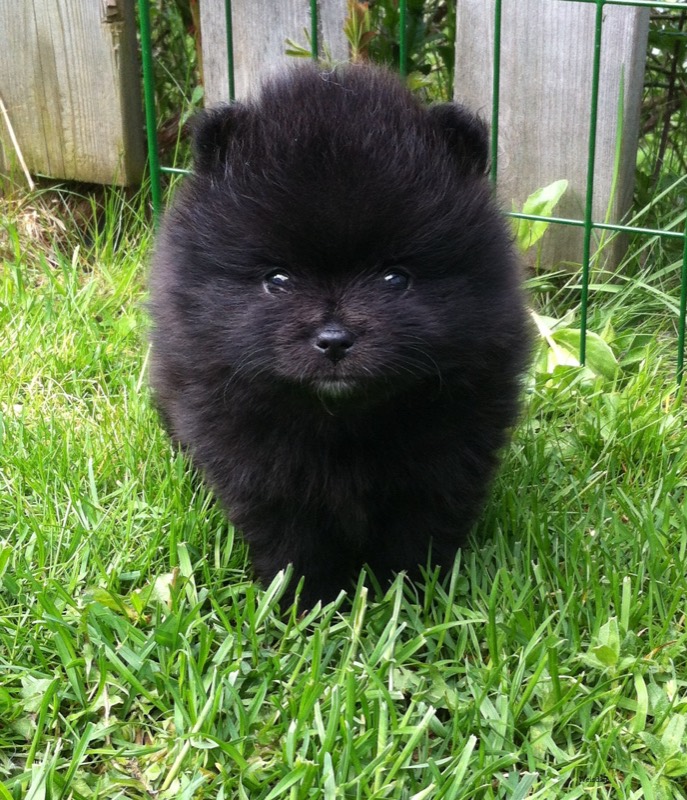
A solid black Pomeranian has a glossy, inky coat that makes the bright eyes and expression pop. They are less common than orange, and a deep, even black with no rust is especially prized.
The genetics of a black Pomeranian
Black Pomeranians can get their color in two ways. Most carry a dominant black gene, which covers the whole coat in black pigment (eumelanin). Others are recessive black, inheriting two copies of a gene that turns off the tan or sable pattern. To the eye they look the same, which is why two black parents can sometimes produce sable or black and tan puppies, and two non-black parents can occasionally surprise you with a black one.
A good black Pomeranian has black pigment everywhere: nose, lips, eye rims and paw pads. Some puppies have a small white mark on the chest or toes. That is common and does not affect the dog's health, though show breeders prefer none.
Rust, fading and the puppy uglies
Black puppies often look like perfect little bears, but the coat does change:
- Rusting. Sun exposure can give a black coat a reddish-brown cast, especially at the hair tips. It grows out with the next coat.
- Undercoat color. Some black Poms have a slightly lighter, grayish or brownish undercoat that shows when the coat is parted or blowing.
- Puppy uglies. Between about four and ten months the puppy coat sheds, and a black puppy can look dull and patchy. See our guide to the puppy uglies for what to expect.
The deep, glossy adult black usually arrives somewhere between twelve and twenty-four months.
Grooming a black coat
Black coats hide tear stains completely and do not show dust the way light coats do, which makes daily care easy. Dandruff and lint, however, show more. Brush down to the skin two or three times a week, use a conditioning shampoo so the coat does not dry out, and keep long afternoon sunbathing sessions in check if you want to avoid rusting.
Video call checklist for black puppies
Black coats are notoriously hard to photograph, which makes a live video call especially useful. Ask the breeder to:
- Bring the puppy into bright, indirect daylight so you can see the face and expression clearly.
- Part the coat to show the undercoat color.
- Show the chest and toes so you know about any white markings.
- Tell you the parents' colors and whether the litter included sable or black and tan siblings.
- Show vaccination and vet records and the microchip details.
Black Pomeranians in our network
Black puppies appear across our breeder regions, and are often requested in the compact teddy bear style, where the round face reads as a tiny bear cub. If you like black but want a little more definition around the eyes and muzzle, take a look at black and tan Pomeranians as well.
Browse available puppies or book a WhatsApp video call to see a black Pomeranian live.
Frequently asked questions
Why is my black Pomeranian turning brown?
Usually sun bleaching, often called rusting. It affects the hair tips and grows out with the next coat. Limiting long periods in strong sun helps.
Can two black Pomeranians have non-black puppies?
Yes. If both parents carry hidden genes for sable or black and tan, some puppies can inherit those patterns.
Is a small white patch on a black Pomeranian a problem?
No. A small white mark on the chest or toes is common and has no effect on health.
See the puppies live on WhatsApp
Pick a time and we'll video-call you from the breeder, puppy in frame, so you can ask anything before you reserve.