Wolf Sable Pomeranian Puppies for Sale
Wolf sable Pomeranians have a silver-gray base with black-tipped hairs, light cream legs and a darker saddle, much like a tiny wolf or Keeshond. It is one of the rarer looks in the breed.
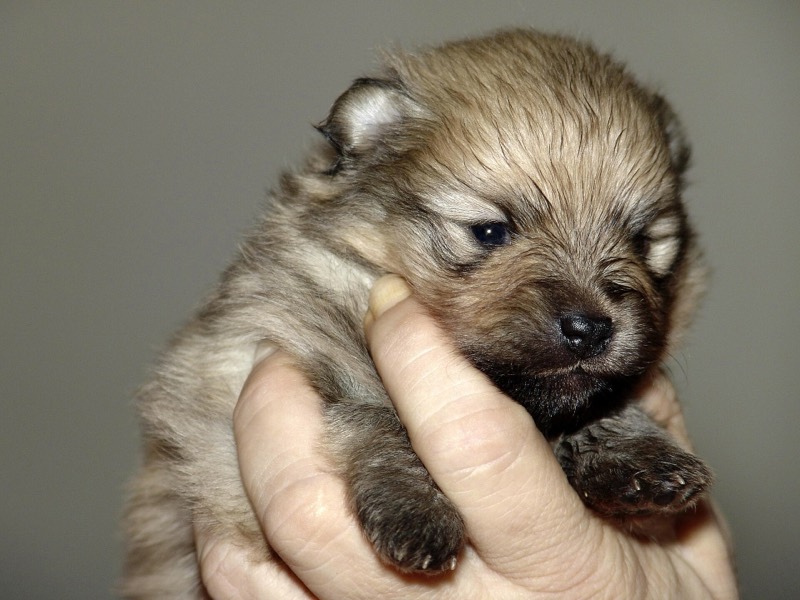
What makes a wolf sable
Wolf sable is a form of the agouti pattern, sometimes called the wild-type pattern because it resembles the coloring of wild canids. Each guard hair is banded: a pale, gray-cream base, sometimes a band of lighter color, and a black tip. Because the base is gray rather than orange, the overall effect is a silver-gray coat with a darker saddle, black ear tips and tail, and lighter cream or silver legs, chest and underside.
The Pomeranian descends from larger spitz-type sled dogs, and wolf sable is a reminder of those roots. Today it is uncommon, and breeders who focus on it tend to have small, carefully planned programs.
Wolf sable versus blue and gray
Wolf sable is often mislabeled. Here is how to tell the difference:
- Wolf sable has a black nose and black points, and the hairs are banded with black tips.
- Blue has a blue-gray nose and points and an even, solid gray coat.
- Orange sable has the same black tipping but over an orange base, so the coat reads warm, not silver.
How the coat changes
Wolf sable puppies are often born very dark and look almost black for the first weeks. The silver base shows through as the coat grows, and adults are often considerably lighter than they were as puppies. The puppy uglies phase can be striking in wolf sables because the shedding coat looks patchy against the lighter regrowth. Expect the true adult look around two years.
Grooming tips
- Brush two or three times a week down to the skin with a pin brush and metal comb.
- Sun can warm the gray tips toward a brownish shade. Shade and conditioner help.
- Tear stains are easy to miss on gray, but still wipe the eyes daily.
- Avoid close shaving; the banded guard hairs give the color its depth.
What to ask on the video call
- Ask for a close-up of the nose. Wolf sables should have a solid black nose.
- Ask the breeder to part the coat on the back so you can see the banding.
- Ask to see both parents and whether earlier puppies from the pair lightened.
- Ask about any warmth in the coat that might indicate orange sable instead.
- Review the vaccination record, vet check and microchip.
Waiting for a wolf sable
Since the color is rare, a wolf sable puppy may not be available every week. If you are set on one, let us know when you book a video call and we will check across our breeder network in Korea, Canada and Mexico.
See available puppies or book a WhatsApp video call to ask about wolf sable Pomeranians.
Frequently asked questions
How do I know a puppy is wolf sable and not blue?
Check the nose. A wolf sable has a black nose and black-tipped, banded hairs. A blue has a blue-gray nose and a solid gray coat.
Do wolf sable puppies get lighter?
Usually yes. They are often born very dark and lighten as the silver base comes through, with the adult look settling around two years.
Why are wolf sable Pomeranians rare?
Few breeders specialize in the color, and it depends on specific agouti genetics from both sides of the pedigree.
See the puppies live on WhatsApp
Pick a time and we'll video-call you from the breeder, puppy in frame, so you can ask anything before you reserve.